
coffee
on the solace of steam and the poetry of everyday sips

There is a strange kind of poetry in the way coffee reveals itself. First the fragrance drifts into the air, sharp yet comforting, like a memory half-recalled. Then the steam curls upward, restless and delicate, before dissolving into the invisible. Finally, the liquid itself, dark and unyielding, touches the tongue with a bitterness that startles before it soothes. Coffee does not pretend. It is not sweet unless we force it to be. It is honest, almost severe, and yet in that severity there is solace. My first sip felt like a warning, but somewhere between sleepless exam nights and languid afternoons, between whispered conversations in cafés and hurried mornings before school, it became less about taste and more about presence. It stood there like a companion, constant and unassuming, holding my hand through fatigue, through celebration, through silence.
To drink coffee is to enter into a lineage older and grander than one might imagine. Centuries ago, in the bustling quarters of the Ottoman Empire, coffeehouses appeared as gathering places where no one hurried, where chessboards were set and musicians played for crowds thick with smoke and speculation. These were not merely places to drink but arenas of thought, of laughter, of dissent. In Europe, coffeehouses were called penny universities, for the price of a single cup bought one the right to sit among merchants, writers, and dreamers, and hear the arguments of the day. Ideas that would alter nations were born in the company of cups that stained the lips and steadied the hand. Coffee became the drink of philosophers and rebels, the liquid muse of both poetry and politics.
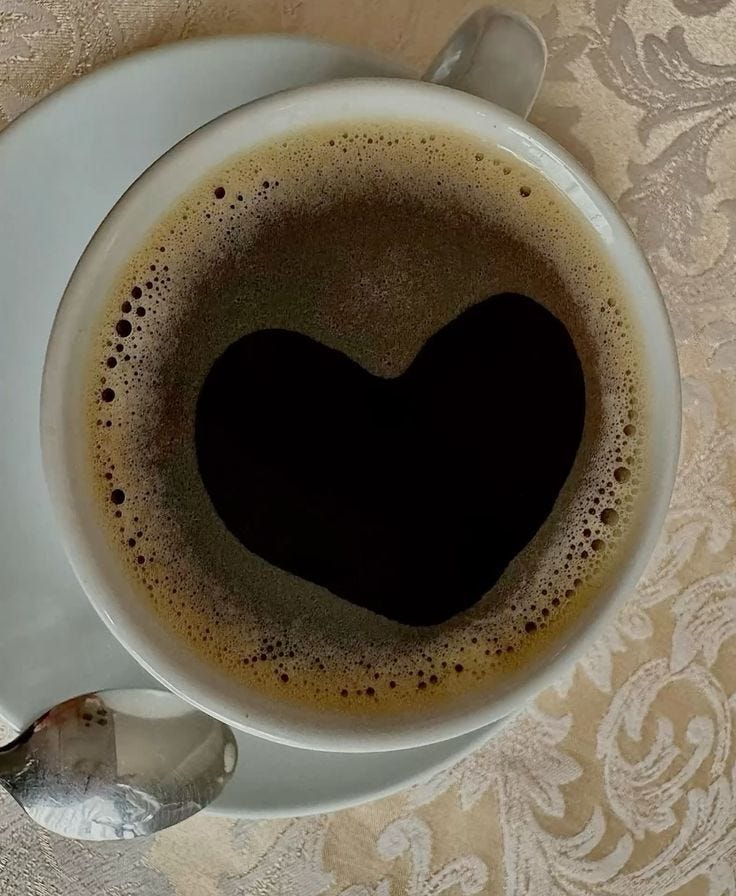
And yet coffee has never belonged only to scholars or revolutionaries. It has always belonged, too, to kitchens and to homes. In India, the aroma of South Indian filter coffee, thick and frothy in steel tumblers, became part of the domestic rhythm. It was poured high and careful, cooled in the passage between vessels, then handed over with a reverence that was quiet but undeniable. In Italy, espresso is taken standing at counters, a ritual of quick intensity before the day presses forward. In Turkey, the grounds are left at the bottom of the cup, sometimes read like scripture, as if fate itself could be traced in their dark patterns. Every culture has found a way to claim coffee, to let it seep into its daily fabric, to make the act of drinking it more than consumption.
But to romanticize coffee alone would be to neglect its shadow. For behind every polished café table, every porcelain cup, every paper sleeve bearing the logo of a global chain, there are hands bent in harvest under the weight of the sun. Those hands often belong to women in Ethiopia, Colombia, Vietnam. They rise before dawn, picking beans that may never pass their own lips. The profit travels elsewhere, the glory lands in cities where coffee is photographed more often than it is savored. The world has built empires of convenience upon the backs of farmers who know the plant more intimately than any barista ever will, and yet who remain invisible in the grand story of coffee. To sip from a latte is to carry, even unknowingly, a fragment of their struggle. The cup we cradle may feel comforting, but it is filled with contradictions.
Still, coffee has a way of becoming personal. It is the reason one stays awake a little longer to finish an essay, the reason two friends linger at a table long after their laughter has quieted. It has sat between lovers who whispered promises over its steam, and between strangers who found in it a reason to begin speaking. It has been a witness to quarrels, to reconciliations, to solitude. Coffee is the silent confidant who never interrupts, who waits patiently as we stare into its dark surface searching for answers. Perhaps this is why even those who claim to dislike its taste return to it when they seek comfort, for comfort is not always sweetness, and sometimes the bitterness that lingers on the tongue feels more truthful than any sugar could.
What makes coffee endure is not merely its flavor nor its power to awaken the body, but its duality. It is bitter and sweet, ancient and modern, exploitative and liberating. It belongs equally to the farmer and the philosopher, to the exhausted student and the wandering dreamer. To drink it is to recognize that life itself is never simple, that joy and labor, beauty and burden, are always intertwined. Every cup is a reminder that we are part of something larger, that in the act of sipping we connect ourselves to centuries of longing and labor, to conversations long silenced and to futures yet imagined.
I return to coffee not merely for the caffeine, not even for the ritual, but for the story it tells. A story of empires and economies, of intimacy and rebellion, of voices heard and unheard. Coffee is not just what wakes us up in the morning. It is what keeps us human, distilled into a cup.
I think you're the only person besides me that thinks so thoughtfully about coffee. I enjoyed reading your piece 😁